
Michael Deering: The Enduring Legacy of Mikey D

Michael Deering, known to the hip-hop world as Mikey D, Mikey Destruction, and Playboy Mikey D, is a significant figure in the evolution of East Coast hip-hop, particularly recognized for his aggressive lyrical style and his pivotal role in the group The Main Source. His career spans decades, marked by collaborations, group affiliations, and a consistent presence within the hip-hop community.

Before his tenure with The Main Source, Mikey D was a member of the rap group The L.A. Posse. This early affiliation provided him with foundational experience in the burgeoning hip-hop scene of the 1980s. While specific details of The L.A. Posse’s output are often overshadowed by his later work, their existence underscores Mikey D’s early immersion in the craft of rhyming and performance (The Encyclopedia of Hip Hop Culture). The L.A. Posse’s work, though perhaps less commercially successful than some of their contemporaries, contributed to the diverse soundscape of early hip-hop, allowing Mikey D to hone his distinctive vocal delivery and lyrical approach.

Mikey D’s most prominent role in hip-hop came with his integration into the critically acclaimed group The Main Source. This transition occurred under significant circumstances following the departure of the group’s original emcee and producer, Large Professor. The Main Source, initially comprised of Large Professor, Sir Scratch, and K-Cut, had established itself as a formidable force in hip-hop with their debut album, (Breaking Atoms). Large Professor departed in 1992. It was in this transitional period that R&B singer Jeff Redd played a crucial role in connecting Mikey D with the group. Redd, without Mikey D’s prior knowledge of the specific group, facilitated this connection, leading to Deering accepting the invitation to join The Main Source and fill the void left by Large Professor.

The result of this new lineup was the album Fuck What You Think, released in 1994. This album marked a significant stylistic shift for The Main Source, largely due to Mikey D’s distinct lyrical approach. His aggressive delivery and often confrontational subject matter contrasted with Large Professor’s more introspective and observational style, yet it maintained the group’s reputation for intricate rhymes and hard-hitting beats. The album, while not achieving the same commercial success as Breaking Atoms, is recognized by hip-hop connoisseurs as a testament to Mikey D’s ability to adapt and contribute meaningfully to an established group’s legacy (Hip Hop America).

Mikey D’s connection with LL Cool J is a notable aspect of his career, highlighting his standing within the Queens hip-hop community. Both artists emerged from the vibrant Queens scene, a hotbed of hip-hop innovation in the 1980s. While specific collaborative tracks or extensive joint projects between Mikey D and LL Cool J are not widely documented, their shared origins and mutual respect within the industry are evident. LL Cool J, a pioneer in his own right, often championed artists from his borough, and Mikey D’s aggressive style resonated with the raw energy that characterized much of early Queens hip-hop (From the Planet of Brooklyn: The Story of Hip-Hop’s Golden Age).

Mikey D’s “aggressive rap style” is a defining characteristic of his artistry. This style is marked by a forceful vocal delivery, often delivered with a rapid-fire cadence and a commanding presence. His lyrics frequently tackle themes of street life, lyrical prowess, and social commentary, delivered with an intensity that demands attention. This aggressive approach, while sometimes perceived as confrontational, is rooted in the competitive nature of early hip-hop, where lyrical battles and displays of verbal dexterity were paramount. It is a style that emphasizes conviction and raw emotion, setting him apart from many of his peers (The Concise Encyclopedia of Hip Hop).

Despite his aggressive lyrical persona, Mikey D is widely regarded by his hip-hop peers as possessing a “positive nature.” This dichotomy between his on-mic intensity and his off-mic demeanor is a common trait among many respected emcees. Within the hip-hop community, respect is often earned not just through lyrical skill but also through character and genuine camaraderie. Mikey D’s ability to maintain positive relationships and earn the admiration of his peers speaks to his professionalism and authentic personality.

His appearance on Soul Train, a seminal American music-themed television show, further cemented his presence in popular culture. Soul Train provided a crucial platform for hip-hop artists to reach a wider audience, showcasing their music and performance skills. Mikey D’s appearance on the show, whether with The L.A. Posse or The Main Source, would have exposed his aggressive style and lyrical talent to a national audience, contributing to his growing recognition within and beyond the hip-hop community.

In recent years, Mikey D has continued to contribute to the hip-hop landscape, demonstrating the enduring nature of his artistry. His new album, Legends Don’t Die, serves as a testament to his longevity and continued relevance. The title itself reflects a conscious acknowledgment of his place within hip-hop history and his refusal to fade into obscurity. This album, like his earlier work, showcases his distinctive flow and lyrical prowess, proving that his aggressive style remains potent and impactful. Legends Don’t Die allows Mikey D to connect with both long-time fans and new listeners, solidifying his status as a respected veteran in the genre.

Mikey D’s journey from the streets of Queens to his current status as a hip-hop legend is a narrative of perseverance, talent, and adaptability. His contributions to The L.A. Posse and, most notably, The Main Source, along with his consistent lyrical output and respected standing among his peers, underscore his significant impact on hip-hop culture.
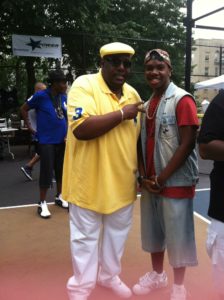

Erykah Badu

Erica Abi Wright (born February 26, 1971), better known by her stage name Erykah Badu is a Grammy Award-winning American singer-songwriter, record producer, activist and actress. Her work includes elements from R&B, hip hop and jazz. She is best known for her role in the rise of the neo soul sub-genre. She is known as the “First Lady of Neo-Soul” or the “Queen of Neo-Soul”.

Early in her career, Badu was recognizable for wearing very large and colorful headwraps. For her musical sensibilities, she has often been compared to jazz great Billie Holiday. She was a core member of the Soulquarians, and is also an actress having appeared in a number of films playing a range of supporting roles in movies such as Blues Brothers 2000, The Cider House Rules and House of D. She also speaks at length in the documentaries Before the Music Dies and “The Black Power Mixtapes”

Erykah Badu was born Erica Abi Wright in Dallas, Texas on February 26, 1971. Her mother raised her, her brother (Jabbada), and her sister (Nayrok) alone after their father, William Wright Jr., deserted the family early in their lives. To provide for her family, the children’s grandmother often helped looking after them while Erykah’s mother, Kolleen Maria Gipson (Wright), performed as an actress in theatrical productions. Influenced by her mother, Erykah had her first taste of show business at the age of 4, singing and dancing with her mother at the Dallas Theatre Centre. Erykah Badu was the owner of Focal point in Dallas, Texas.

By the age of 14, Erykah was free-styling for a local radio station alongside such talent as Roy Hargrove. In her early youth, she decided to change the spelling of her name from Erica to Erykah, as she firmly believed her original name to be her slave name. The term ‘kah’ signifies the inner self. Badu is her favorite jazz scat sound and is also an African name for the 10th born child used for the Akan people in Ghana.

Upon graduating from Booker T. Washington High School for the Performing and Visual Arts, Badu went on to study theater at the historically black college Grambling State University. Concentrating on music full-time, she left the university in 1993 before graduating and took on several minimum wage jobs to support herself. She taught drama and dance to children at the South Dallas Cultural Center. Working and touring with her cousin, Robert “Free” Bradford, she recorded a 19-song demo, Country Cousins, which attracted the attention of Kedar Massenburg, who set Badu up to record a duet with D’Angelo, “Your Precious Love,” and eventually signed her to a record deal with Universal Imperial Records.

After 10 years as a vegetarian, Badu became a vegan in 2006: “Vegan food is soul food in its truest form. Soul food means to feed the soul. And to me, your soul is your intent. If your intent is pure, you are pure.” Badu splits her time between Dallas, Texas and Fort Greene, New York.

In 1995, Badu became involved with rapper André 3000 of OutKast, with whom she had her first child, a son named Seven Sirius Benjamin, on November 18, 1997. Their relationship ended sometime in 1999. Their relationship inspired André 3000 to write the song “Ms. Jackson”.

In 2000, Badu was in a romantic relationship with fellow Soulquarian Common; their relationship ended in 2002. On July 5, 2004, Badu gave birth to a daughter, Puma Sabti Curry; Puma’s father is West Coast rapper The D.O.C., originally from Dallas. On February 1, 2009, Badu gave birth to her third child, a girl named Mars Merkaba Thedford, with her boyfriend of five years, rapper Jay Electronica.

Written by Dianne Washington

Reflections of Hip Hop

When Hip Hop was born I was only 6 years old living in Marlboro projects in Brooklyn New York. As I got older, I would write rhymes and perform at the skating rink. When I was feeling down I could always count on Hip Hop to lift me up. I would go to all the shows and sneak backstage to meet my favorite artists. In Brooklyn, In the 70’s we we’re listening to James Brown, MFSB, Chic, and other soulful artists before Rappers Delight hit the world by storm in 79′. After that it quickly became a “Domino effect“, everybody wanted in. The rest is history. The first Hip Hop song I fell in love with was Planet Rock, I got lost in those drums. I played it over and over and my mom use to scream at me “Iris, turn that sh** down!!!!” I remember like it was yesterday. The first years of Hip Hop were the best years of my life with park jams, skate jams and parties. Hip Hop brought everyone together and formed a bond that can never be broken. After 44 years Hip Hop is still in my blood and always will be. I can go on and on but I’ll leave it as “Long Live Hip Hop!!!!”


Bigger And Deffer: The 30th Anniversary

Another hip hop classic that has reached 30 years. Coming from Queens, LL was still a young, ambitious, and fresh faced guy on the scene. On June 2nd, 1987, LL released his second album “Bigger and Deffer.” Compared to his debut “Radio”, BAD was definitely what the title says, bigger and deffer and so was LL himself. Still not quite there yet as far as growth as an artist, LL still had the cool and laid back personality, he still had the style but this album was still a step further than his previous. Besides the singles, the album was full of braggadocio, lots of DJ scratches, and a “rap ballad” that was the first to be commercially successful. The album also reminds me of Jazzy Jeff and Will aka The Fresh Prince with its early hip hop days sound, when hip hop was just beginning to become something much more bigger. The beginning of a golden era. It’s not a top 5 LL album, but it’s definitely an album I’ll recommend when it comes to 80’s hip hop.

Ladies Love Cool James: The Legacy of LL Cool J

This hip hop legend’s story begins when he was making demos in his grandparents’ basement. The year was 1984 when he got signed to Def Jam. It wasn’t until late 1985 when he released his debut album called “Radio.” This hip hop legend was born James Todd Smith but we all know him as LL Cool J. “Radio” became the label’s first full length album. Singles like “I Can’t Live Without My Radio”, “You’ll Rock” and one of LL’s most infamous joints, “Rock the Bells.” What I personally love about the album is LL’s energy and DJ scratches, especially on the remix to “I Need a Beat.” LL’s second joint had the perfect name for a comeback, “Bigger and Deffer” or simply put “BAD.” On this joint, LL goes harder but also smoother. The adrenaline rush on “I’m Bad” proved LL to be the “baddest” at the time and “I Need Love” showed a more softer, sensitive and vulnerable side of LL but when LL decided to ride that wave of “sensitivity” and being more laid back and softer on 1989’s “Walking With a Panther”, hip hop fans weren’t impressed with LL being so “soft” and they accused him of “selling out” and gone “too Hollywood.” He wasn’t the same LL people were rocking with on the first two albums. Although this album had more hits than the first two, LL had more party joints too. “Jingling Baby” is a classic that gets the hip hop fans moving at a party always. LL returns with 1990’s “Mama Said Knock You Out.” It was a great comeback album from the disappointing persona that he had on the previous album. This album, LL proved to the fans and the people that he was the same and never did change. He proved that he was still the same James and didn’t let his success get to his head and he proved that on “Around the Way Girl.” In the beginning of the music video, LL turns to homeboy and says “I don’t want Ivana, I want Tawana!” The song is a hip hop classic with a catchy soulful hook and chorus. A classic ode to the girls in the hood with the extensions in their hair, bamboo earrings, at least 2 pair, a Fendi bag and a bad attitude. Usually, the only uppity and fancy women are being praised but LL took it there and showed the hood girls love. My personal favorite from the album is “6 Minutes of Pleasure” the Hey Girl Remix. It’s also my all time favorite LL joint and it’s super underrated to me. His next joint “14 Shots to the Dome” is LL’s most underrated joint and it had a more West Coast influenced sound but the singles are still dope. “Pink Cookies In a Plastic Bag Getting Crushed By Buildings” and the Teddy Riley remix to “Stand By Your Man” are my top favorites. 1995’s “Mr. Smith” is the only LL album I own physically. This album to me is the beginning of the more grown up, more mature LL. Besides the dope singles, the album title track is my favorite. 1997’s “Phenomenon” didn’t really do much for me. “4, 3, 2, 1” was the only hot joint I can remember, as well as the album title track. “G.O.A.T.” also had the same effect. “You and Me” and “Imagine That” are dope though. 2002’s “10” I felt like LL was back, the LL I liked. “Luv U Better” is dope but the Amerie track “Paradise” was super dope. It’s another one of my all time favorite LL joints. His last three albums “The DEFinition”, “Todd Smith” and “Exit 13” were all just something to me he just put out. He had nothing to prove anymore as an artist, he’s done it all already. His prime is way behind him now but LL still remains a hip hop legend, both on the mic and fashionably. LL is definitely one of the greats in hip hop. Can’t forget that he’s had a successful acting career as well but I like the artist more personally. More than 30 years later after his days as a 16 year old from Queens, LL is hands down the only hip hop artist of his time to stay consistent with the hits and continued to push it to the next level, on top of the fact that he changed with the times but still remained himself, just like Jay-Z. Always and forever he will be one of the greats of all time.

How Ya Like Me Now?: Happy Birthday Kool Moe Dee! 🎈

It was 1987 when Kool Moe Dee asked “How Ya Like Me Now?” in his braggadocios kinda way that was in your face and showed lots of confidence with a tad bit of cockiness. It was also in 1987 when the cover photo of his album with the same title, had him rocking a fresh all white fit with a Jeep Wrangler behind him and a Kangol hat tucked underneath one of the wheels of the jeep. That Kangol represented the brief beef he had with LL Cool J, who is my all time favorite 80’s rapper and a HUGE inspiration for me when it comes to fashion. Another classic from Moe Dee like “Wild Wild West” is a joint that I grew up on. How crazy is it that a 22 year old like myself was growing up on Kool Moe Dee? LOL! But I did and it was dope! It was even more dope when I actually met Kool Moe Dee four years ago in Harlem on Convent Avenue, as mentioned in the song, which is my stepfather’s neighborhood. Every year in August, on Convent, they throw this big hip hop event called “Da Hill Reunion” where they have basketball games, street dances, people having cookouts in the park, fresh to def in their new gear, kids running up and down the playground and of course, my favorite part is when the DJ is cutting it up on the 1’s and 2’s spinning good music all day. street lineSome recent stuff with a new twist on it and of course some old school too and rappers come to the reunion to perform and show love. Kool Moe Dee and L.A. Sunshine are the main ones who be at the reunions. To those who don’t know about L.A. Sunshine, he was a part of the hip hop group The Treacherous Three along with Moe Dee and DJ Easy Lee. They had joints like “Feel the Heart Beat”, “Action” and another joint they did with Spoonie Gee called “The New Rap Language.” Doug E. Fresh comes to the reunion sometimes too. When I met Moe Dee four years ago, he was extremely cool, like I expected and at that time, I wasn’t rocking a high top fade and a vintage/retro look, I was slowly getting to that point but not until a year after that. I loved going to those reunions growing up but lately it hasn’t been the same for the simple fact that it feels dead and doesn’t have the same exciting energy it used to have also, gentrification. All of these out of town white folk moving into the neighborhood are calling the cops at 8 or 9 o’clock at night when everyone is still rocking and having fun. They call the cops on us to stop the music because we’re “making too much noise.” Maybe I’ll be returning to the reunion this year just to see what’s it like and maybe I’ll run into Kool Moe Dee again, that’ll be dope forreal!
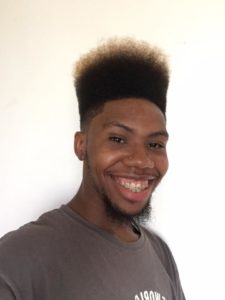
Written by Jay-Doggz

Street Line