VERA EDWARDS — THE WOMAN WHO BUILDS WORLDS
Vera Edwards is one of those rare creators whose work speaks for her long before she ever steps into a room. A writer, director, producer, leader, and mother, she has spent years shaping film from the inside out. She has given opportunities, opened doors, built confidence in others, and helped launch careers that may not have existed without her. She does this quietly, without showcasing or seeking attention, but the impact is real and lasting.
On set, Vera is not simply a director calling shots. She is present. She watches people. She cares about their comfort, their focus, their emotional clarity. She has fed actors and crew out of her own pocket, brought resources to make sure people felt supported, and gave her time and energy in ways that money can’t measure. When budgets were low, when things were uncertain, when others might have walked away, Vera found a way to keep going. She created from grit, heart, and purpose, not excuses. Her will to create something real is what funded her films.
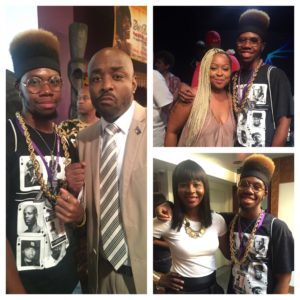
She is responsible for films such as PPRESSED, Perate, Waiting 4 Mr. Wright, and Chicken. These are not just movie titles, but examples of her voice and her commitment to telling stories rooted in real life. PPRESSED is where Karine Sho-Time Thornton was given his first lead role. That casting alone changed the direction of a career. Vera did that. Not an agency. Not a studio. A woman with vision and belief. Perate, Waiting 4 Mr. Wright carried cultural influence and emotional honesty. Chicken proved her storytelling does not shy away from truth, complexity, or humanity. And now she steps further into her legacy with The Legend of Johnnie Shepherd, a film that continues her tradition of depth and narrative strength.
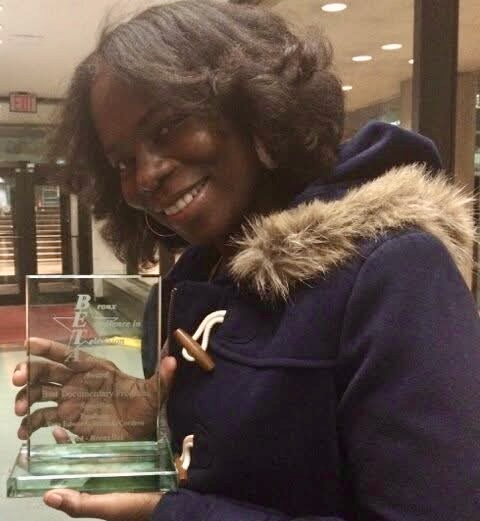
Her work was acknowledged with a citation from a New York State Senator Cordell Cleare as well as a citation from Bronx Borough President Vanessa Gibson and a citation from New York State Assembly woman Amanda Septimo, honoring her achievements and her contributions to both film and community. That recognition was significant because it came from outside the entertainment world, where people sometimes miss the value of those who are building foundations quietly. Her peers have not always celebrated her the way they should, not because the work wasn’t deserving, but because people often take greatness for granted when it is close to them.
But through all of that, Edwards never stopped giving. She has spent holidays opening her home to people who had no place to go. She has volunteered her time in community spaces. She has been there when life was overwhelming for others. She has held people up, supported them, guided them, and believed in them when they did not believe in themselves.
There are many people who direct films. There are fewer who change lives while doing it. Vera Edwards does both.
She is a woman of depth, wisdom, compassion, humor, creativity, and conviction. She does not need to perform or pretend to fit into any image. She has always been herself. Comfortable. Confident. Clear. Her storytelling has its own rhythm. Her camera has its own eye. Her films are unmistakably hers.
This is someone who deserves her flowers now. Not as an afterthought. Not later. Not once history tries to rewrite the story. Now, while she is still creating, still giving, still here.
Vera Edwards is not simply a filmmaker.
She is a foundation.
She is a legacy.
She is a legend walking.
And it is time people honored her as such.
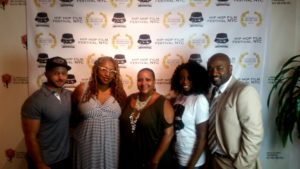 , I was back at home in the Bronx. It felt like a Cinderella story except a hip hop version where I was home all the time with ambitions and crazy big dreams of doing things for the hip hop community and when I finally got that chance too, I was decked out in the flyest b-boy, 80’s hip hop gear and then BOOM, I’m back home, it never happened. The part about the location sounds like I’m just repeating myself after doing interviews with people yesterday too. LOL! So I get there and automatically fell in love with the place
 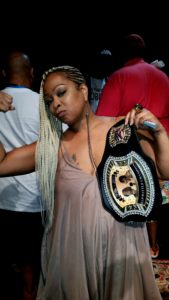 because of it’s hip hop aura, vibe and spirit. It was almost like being backstage at the years biggest hip hop awards and I was V.I.P. I continue to scope out the place and get used to it more and I was completely scared and nervous but I played it off. The very first person I interviewed was the lovely Ms. Dedra Tate. I don’t really remember everyone’s position there at the film festival because everything happened so fast but she knew it was my first time, she knew I was a little nervous and she made me feel really comfortable. I also interviewed another nice lady whose name I forgot and then Ms. Lisa Cortes, she’s the woman behind movies like “Precious.” She also made me feel comfortable and she even gave me advice about how to interview people. I felt loved, I felt like everyone was planting these seeds in me that would eventually make me as big as them someday. I felt important to be in a space about my true love, HIP HOP. Then there are the panels. The panels are when they discuss all types of projects like movies and documentaries and the people who were involved tell us the people who are there what they’re experiences was like and how did their ideas come about to making these things happen.
 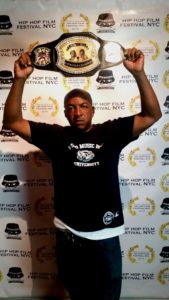 People like filmmakers, actors, Ralph McDaniels, Do It All Du from the legendary hip hop group Lords of the Underground, and even Monifah was there as a surprise for one panel. Out of all the people I met, I was mostly excited about Monifah and Ralph McDaniels because I grew on Monifah’s music, especially her first two albums, the classic “Moods… Moments” in 1996 and her sophomore album in 1998, “Mo’hogany.” I just remember my mom playing her songs “You”, “You Don’t Have to Love Me”, and my all time favorite “It’s Alright” but I always bothered my sister with the song “Peaches & Cream” from her underrated 2000 album “Home.” Before I could meet
 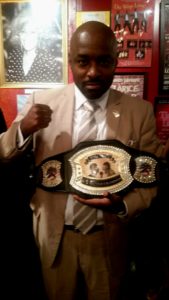 Ralph McDaniels for the second time, he was already gone. I wasn’t upset about it because I knew for sure I was gonna come across this man again sometime. I almost forgot to mention that I met the lovely MC Debbie D from the “Beat Street” movie, one of my all time favorite movies. After being underneath that freezing cold air conditioner all day, had a good bite to eat at Applebee’s and then went back home. I originally went to meet the legendary Roxanne Shanté but I went home, I was tired. To have an experience like this makes me even more and more appreciative about hip hop and it also made me open my eyes to the fact that hip hop comes in many different forms, not that I didn’t know that already but still. There’s conscious rap, party/happy rap, trap rap, there’s ratchet stuff too and I realize that even though certain types of rap music is not for me, it’s something that others appreciate and we can’t talk down on others for liking what they like. After all, hip hop is about having fun but it’s also a political statement, a Scarface movie and a ratchet thing too.