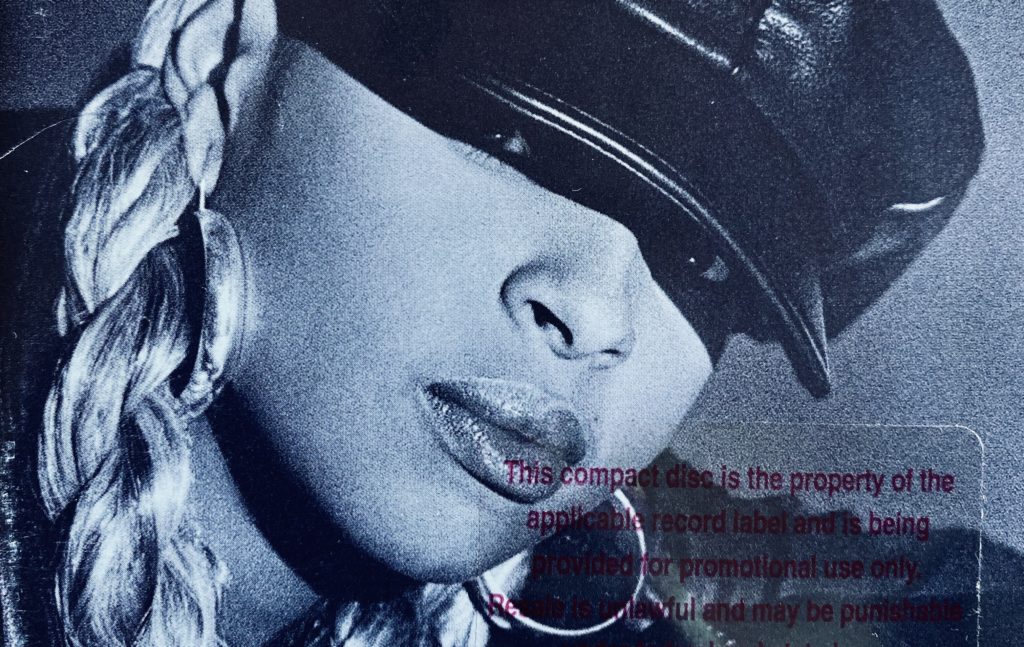

Dionne Warwick

Dionne Warwick (born Marie Dionne Warrick; December 12, 1940) is an American singer, actress and television show host, who became a United Nations Global Ambassador for the Food and Agriculture Organization, and a United States Ambassador of Health.

Having been in a partnership with songwriters Burt Bacharach and Hal David, Warwick ranks among the 40 biggest hit makers of the entire rock era, based on the Billboard Hot 100 Pop Singles Charts. She is second only to Aretha Franklin as the most-charted female vocalist of all time, with 56 of Warwick’s singles making the Billboard Hot 100 between 1962 and 1998 and 80 singles making all Billboard charts combined.

Having been in a partnership with songwriters Burt Bacharach and Hal David, Warwick ranks among the 40 biggest hit makers of the entire rock era (1955–2012), based on the Billboard Hot 100 Pop Singles Charts. Dionne Warwick is second only to Aretha Franklin as the most-charted female vocalist of all time with 56 of Dionne’s singles making the Billboard Hot 100 between 1962 and 1998.

Warwick was born in East Orange, New Jersey, to Mancel Warrick (1911–1977), who began his career as a Pullman porter and subsequently became a chef, a gospel record promoter for Chess Records and later a Certified Public Accountant; and Lee Drinkard Warwick (1920–2005), manager of The Drinkard Singers (see below). Warwick had a sister Delia “Dee Dee” and a brother, Mancel Jr., who was killed in an accident in 1968 at the age of 21. She has African American, Native American, Brazilian and Dutch ancestry

Dionne came from a family of singers. Dionne’s mother, aunts and uncles were members of the Drinkard Singers, a renowned family gospel group and RCA recording artists that frequently performed throughout the New York metropolitan area. The Drinkard family originated from Blakley, Georgia and migrated to Newark, New Jersey in 1923. The family was composed of Nitcholas “Nitch” Drinkard, and Delia Drinkard, Warwick’s grandparents, and their children: William, Lee (Warwick’s mother), Marie “Rebbie” (Warwick’s namesake), Hansom, Anne, Larry, Nicky, and Emily “Cissy” (who is the mother of Warwick’s cousin, Whitney Houston). Dionne’s paternal grandfather, Elzae Warrick was the preacher at St. Luke’s AME, the church attended by the Drinkard family. Lee Drinkard and the preacher’s son, Mancel, were later married and Dionne became the Drinkard family’s first grandchild on December 12, 1940.

The original Drinkard Singers (known as the Drinkard Jubilairs) consisted of Cissy, Anne, Larry, and Nicky. Marie instructed the group and they were managed by Lee. As they became more successful, Lee and Marie also began performing with the group, and they were augmented by Judy Guoins, later known as pop/R&B singer Judy Clay, whom Lee had unofficially adopted. Elvis Presley eventually expressed an interest in having them join his touring entourage. Dionne began singing gospel as a child at the New Hope Baptist Church in Newark, New Jersey. She performed her first gospel solo at the age of six and frequently joined The Drinkard Singers.

Her first televised performances were in the mid-and late 1950s with the Drinkard Singers on local television stations in New Jersey and New York City. Warwick grew up in a racially mixed middle-class neighborhood. She stated in an interview on The Biography Channel in 2002 that the neighborhood in East Orange “was literally the United Nations of neighborhoods. We had every nationality, every creed, every religion right there on our street.” Warwick was untouched by the harsher aspects of racial intolerance and discrimination until her early professional career, when she began touring nationally.

Warwick graduated from East Orange High School in 1959 and was awarded a scholarship in Music Education[citation needed] to the Hartt College of Music in Hartford, Connecticut (from which she earned a masters degree and which would later award her an honorary doctorate in Music Education in 1973). In My Life, as I See It: An Autobiography, Warwick lists her honorary doctorate from Hartt among those awarded by six other institutions.

Dionne Warwick married actor and drummer William David Elliott (1934–1983) (CBS’s Bridget Loves Bernie – 1972–73) in 1966; they divorced in May 1967. They reconciled and were remarried in Milan, Italy, in August 1967, according to Time. On January 18, 1969, while living in East Orange, New Jersey, she gave birth to her first son, David Elliott. In 1973, her second son Damon Elliott was born. On May 30, 1975, the couple separated and Warwick was granted a divorce in December 1975 in Los Angeles. The court denied Elliott’s request for $2000 a month in support pending a community property trial, and for $5000, when he insisted he was making $500 a month in comparison to Warwick making $100,000 a month. Warwick stated in Don’t Make Me Over: Dionne Warwick, a 2002 Biography Channel interview, “I was the breadwinner. The male ego is a fragile thing. It’s hard when the woman is the breadwinner. All my life, the only man who ever took care of me financially was my father. I have always taken care of myself.”

Warwick lived in Brazil, a country she first visited in the early 1960s, until 2005, according to an interview with JazzWax, when she moved back to the United States to be near her ailing mother and sister. She became so entranced by Brazil that she studied Portuguese and divided her time between Rio de Janeiro and São Paulo. In April 2010, in an interview on talk-show Programa do Jô, she said Brazil was the place where she intended to spend the rest of her life after retiring.

In 1993, her older son David, a former Los Angeles police officer, co-wrote with Terry Steele the Warwick-Whitney Houston duet “Love Will Find a Way”, featured on her album, Friends Can Be Lovers. Since 2002, he has periodically toured with and performed duets with his mother, and had his acting debut in the film Ali as the singer Sam Cooke. David became a singer-songwriter, with Luther Vandross’ “Here and Now” among others to his credit.

Her second son, Damon Elliott, is also a noted music producer, who has worked with Mýa, Pink, Christina Aguilera and Keyshia Cole. He arranged and produced his mother’s 2006 Concord release My Friends and Me. She received a 2014 Grammy Award nomination in the Traditional Pop Category for her 2013 album release, Now.

On January 24, 2015, Warwick was hospitalized after a fall in the shower at her home. After ankle surgery, she was released from the hospital.

Warwick’s sister Dee Dee Warwick also had a successful singing career, scoring several notable R&B hits, including the original version of “I’m Gonna Make You Love Me” and “I Want To Be With You”, from the Broadway version of the musical ‘Golden Boy’. She also recorded the original version of the song “You’re No Good”, which later became an R&B hit for the late Betty Everett and also a #1 Pop smash for Linda Ronstadt. It was also covered by Liverpool group The Swinging Blue Jeans in 1964, reaching No.3 in the UK and No.97 in the US. This group also recorded ‘Don’t Make Me Over’ and had a 1966 hit, reaching No. 31 in UK.
Warwick’s cousin was the singer Whitney Houston, and her aunt is Gospel-trained vocalist Cissy Houston, Whitney’s mother.

In her 2011 autobiography, My Life, as I See It, Warwick notes that opera diva Leontyne Price is a maternal cousin.

Written by Dianne Washington
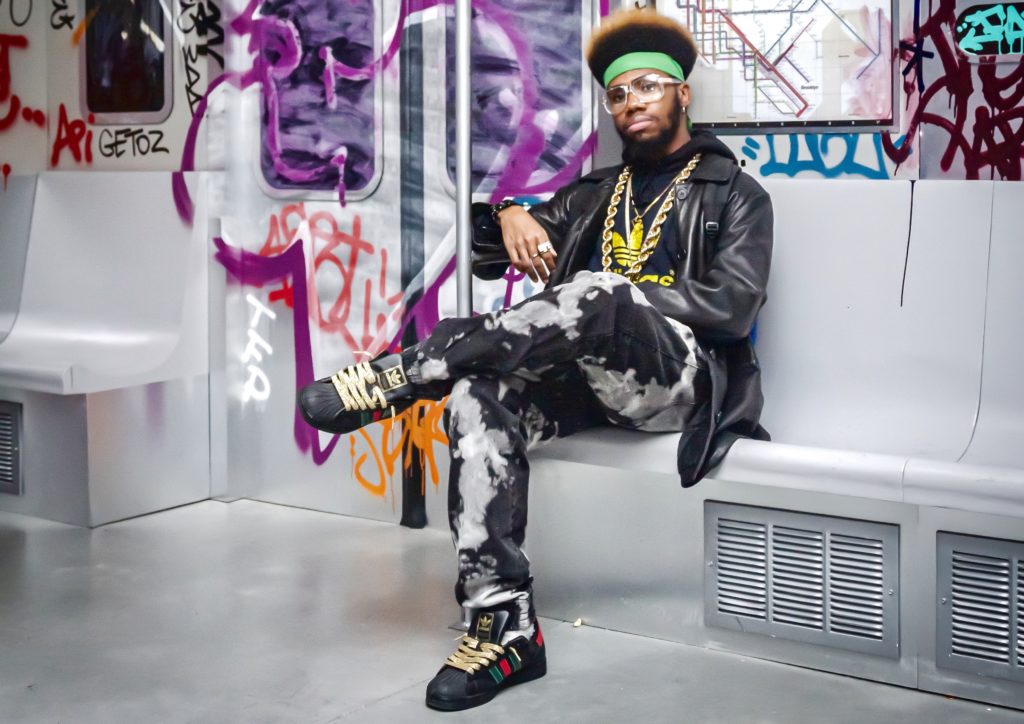
Mos Def

Yasiin Bey born Dante Terrell Smith; December 11, 1973), best known by his stage name Mos Def, is an American hip hop recording artist, actor and activist from Brooklyn, New York City, New York. Best known for his music, Mos Def embarked on his hip hop career in 1994, alongside his siblings in the short-lived rap group Urban Thermo Dynamics (UTD), after which he appeared on albums by Da Bush Babees and De La Soul. He subsequently formed the duo Black Star, alongside fellow Brooklyn-based rapper Talib Kweli, and they released their eponymous debut album in 1998. He was featured on the roster of Rawkus Records and in 1999 released his solo debut, Black on Both Sides. His debut was followed by The New Danger (2004), True Magic (2006) and The Ecstatic (2009). The editors at About.com listed him as the 14th greatest emcee of all time on their “50 greatest MC’s of our time” list.

Prior to his career in music, Mos Def first entered public life as a child actor, having played roles in television movies, sitcoms, and theater. Since the early 2000s, Mos Def has been well known for his roles in films such as Something the Lord Made, Next Day Air, The Hitchhiker’s Guide to the Galaxy, 16 Blocks, Be Kind Rewind, The Italian Job, The Woodsman, Bamboozled and Brown Sugar, as well as for his portrayal of Brother Sam in the Showtime drama series Dexter. He is also known as the host of Def Poetry Jam, which aired on HBO between 2002 and 2007.

Mos Def has been vocal on several social and political causes, including police brutality, the idea of American exceptionalism, and the state of African Americans.

Mos Def was born as Dante Terrell Smith in Brooklyn, New York City, the son of Sheron Smith and Abdul Rahman. The eldest of 12 children and step-children, he was raised by his mother in Brooklyn, while his father lived in New Jersey.

Although his father was initially a member of the Nation of Islam and later followed Imam Warith Deen Mohammed, who merged into mainstream Sunni Islam from the Nation, Mos Def was not exposed to Islam until the age of 13. At 19, he took his shahada, the Muslim declaration of faith. He is close friends with fellow Muslim rappers Ali Shaheed Muhammad and Kamaal Ibn John Fareed (Q-Tip) of the rap group A Tribe Called Quest.

Mos Def attended middle school at Philippa Schuyler Middle School 383 in Bushwick, Brooklyn where he picked up his love for acting. After returning from filming You Take the Kids in Los Angeles, and getting into a relationship with an older girl, Mos Def dropped out of high school during sophomore year. Growing up in New York City during the crack epidemic of the 1980s and early 1990s, he has spoken about witnessing widespread instances of gang violence, theft and poverty in society, which he largely avoided by working on plays, Off-Off-Broadway and arts programs. In a particularly traumatic childhood experience, Mos Def witnessed his then five year old younger brother Ilias Bey (b. Denard Smith) get hit by a car. Bey, who later adopted the alias DCQ, was described by Smith as “my first partner in Hip Hop”.

Mos Def began his rap music career in 1994, forming the rap group UTD (or Urban Thermo Dynamics) along with younger brother DCQ and younger sister Ces. In 2004, they released the album Manifest Destiny, their first and only release to date. The album features a compilation of previously unreleased and re-released tracks recorded during the original UTD run.

In 1996, Mos Def emerged as a solo artist and worked with De La Soul and Da Bush Babees, before he released his own first single, “Universal Magnetic” in 1997.

Mos Def signed with Rawkus Records and formed the rap group Black Star with Talib Kweli. The duo released an album, Mos Def & Talib Kweli are Black Star, in 1998. Mostly produced by Hi-Tek, the album featured the singles “Respiration” and “Definition”, which both reached in the Billboard Hot R&B/Hip-Hop Songs chart.

Mos Def released his solo debut album Black on Both Sides in October 1999, also through Rawkus. The single “Ms. Fat Booty” charted, while the album reached #25 on the Billboard 200. Around this time he also contributed to the Scritti Politti album Anomie & Bonhomie.

In January 2002 Rawkus Records was taken over by Geffen Records, which released his second solo album The New Danger in October 2004. It included contributions by Shuggie Otis and Bernie Worrell, Doug Wimbish,and Will Calhoun as the Black Jack Johnson Band. The album reached #5 on the Billboard 200, making it the most successful for the artist to date. The single “Sex, Love & Money” charted, and was nominated for a Grammy Award. Mos Def’s final solo album for Geffen Records, titled True Magic, was released in 2006.

Mos Def married Maria Yepes in 1996, and has two daughters with her: Jauhara Smith and Chandani Smith. He filed for divorce from Yepes in 2006. The former couple made headlines when Yepes took Mos Def to court over failure in child-support obligations, paying $2,000 short of the monthly $10,000 he is ordered to pay. Mos Def has four other children.

His mother Sheron Smith, who goes by her nickname “Umi”, has played an active role managing portions of her son’s career. She is also a motivational speaker, and has authored the book Shine Your Light: A Life Skills Workbook, where she details her experience as a single mother raising him.

In January 2016, Mos Def was ordered to leave South Africa and not return for five years, having stayed in the country illegally on an expired tourist visa granted in May 2013. Also that month, he was charged with using an unrecognized World Passport and having lived illegally in South Africa since 2014. Mos Def had reportedly recruited Kanye West to help defend him, and posted a message on West’s website announcing his retirement from show business. There was an ongoing court case in relation to immigration offences involving the artist and his family.

Written by Dianne Washington

Universal Hip Hop Museum: A Bronx Tale

When it comes to the city of New York, the 5 boroughs, each borough has its own particular magic that the others don’t have. Each borough has its own “Picasso” to perfectly represent it. Harlem has 125th Street and the Harlem Renaissance history, Queens has Queensbridge projects and the history of all the hip hop greats that came out and survived it, Brooklyn has Biggie Smalls and the Barclay’s Center downtown where all the greatest stars from all over the world go to sell out shows and then there’s The Bronx. For a very long time, The Bronx was only known mostly for negative things. It’s environment, the people, the atmosphere, the food, the neighborhoods, the crime, the poverty, sounds like every other ghetto in the entire New York City right? But to those who dislike The Bronx solely like to focus on the negatives due it’s borough’s own reputation. Outside of it’s constant ignorant picking and biggin’ up the negatives of The Bronx, there’s one main positive story to look forward to about the borough and it’s the story about the birthplace of Hip Hop culture. It’s a place where all the hip hop pioneers and early gangs have walked the land. They fought, made up, and created something out of what their environment was. Just when the Civil Rights Movement and the Disco era were slowly coming to a close, here’s this music, style, & culture that was born. Born to represent the poor kids with run down sneakers from playing outside all day, to having little to no food, living in a place that burned down and abandoned, Hip Hop became the soundtrack of the ghetto. Block parties & house parties took over, DJ’s stole equipments and vinyl just to make these parties happen. Climbing up electric poles in the street to hook the wiring up to the equipment so that the DJ could do his thing, it was then the DJ’s gave birth to the break dancers or what they were called the “B-boy’s” and “B-girl’s.” Coming our to dance during the break part of the song the DJ spun over and over on a loop, there was also the “emcee” or put MC aka the Mic Controller or Master of Ceremony. It was then during the 1970’s when hip hop emerged out of the ghetto streets of The Bronx, New York. So many years later, the culture has captivated and progressed into so much more. The fashion, movies, the artists, everything. Even better, The Bronx even has a new Universal Hip Hop Museum at The Bronx Terminal Market that takes you on a historical journey of hip hop’s history. I like to call it a “Disney World” for a Bronx native. A Bronx native like myself is proud to be walking the land of the pioneers everyday. To see these important figures names and faces on the walls is an everyday inspiration to keep doing what I’m doing. It makes me proud to BE from Da Boogie Down Bronx, The South Bronx, where the people are fresh! Word! A small exhibit for now to give us a preview of what’s to come. The official place will be built in 2023. 50 years after it’s official birth, August 11th, 1973. It’s the place to be! You can check out the website at uhhm.org and purchase a free ticket for entry at the place. Pick a day, a time, all that good stuff! The place is opened from 10am to 7pm. You don’t wanna miss out on this! You can’t! Go visit ASAP!

What Happened To Hip Hop

I remember when my mom introduced me to hip hop back in the early eighties. She would play sounds of Flash and the Furious Five, Kool Moe Dee and Afrikka Bambatta. I jammed to the sounds of Erick B. and Rakim, Big Daddy Kane and KRS One and the Boogie Down Production. I loved to record songs on my tape deck to listen to in my Walkman. It was the late eighties when I began jamming to the tunes of Salt & Pepa, Queen Latifah, MC Lyte and YoYo. These were the female MC’s that every young girl aspired to be like. From the style of dress, down to the no nonsense attitudes, the first ladies of Hip Hop were the epitome of excellence. Back in the beginning hip hop contained lyrical content and a message that empowered the community. We were proud of the hip hop culture and all that it stood for. The question now is What Happened To Hip Hop? The new hip hop generation is filled with trap rappers that have poor lyrical content with catchy hooks and illicit messages. The focus is no longer about striving to improve the community. It’s now about adapting by the use of drugs and alcohol. There is blatant disrespect for women and women disrespecting themselves to sell records. The saddest part is that these are the people that the urban community looks to as role models. Little girls want to look like Barbie Dolls and Twerk like the celebrities that they hear and see degrading themselves on MTV and popular radio stations. Female MC’s went from “Who You Calling A Bitch to calling themselves bitches”. There is no more respect for the community in my favorite music genre. Instead the message is about popping pills, drinking alcohol, selling drugs and initiating violence. I would like to give a heartfelt apology to the pioneers of hip hop for the blatant disrespect of the culture. Again let me ask What Happened To Hip Hop
Written By:
Regina Annette

Jermaine Jackson

Jermaine La Jaune Jackson (born December 11, 1954) is an American singer, songwriter, bass guitarist and member of the Jackson family. He was a member of The Jackson 5, a singing group composed of him and four of his brothers, from 1962 to 1975, where he was the second lead vocalist (after brother Michael) and played bass guitar. He sang the lead on some of their songs and had featured vocals on many others, including many of their biggest hits like “I’ll Be There” and “I Want You Back”. When the group left the Motown label and reformed as “The Jacksons”, Jermaine stayed with Motown, due to loyalty to Motown founder Berry Gordy, whose daughter he had married, and was replaced in the group by youngest brother Randy. He rejoined the group in 1983, and has remained with them since, through various breakups and reunions.

Jermaine also had a solo career concurrent with his brother Michael’s, and had a number of top 30 hits throughout the 1970s and 80s. He also produced and recorded duets with American singer Whitney Houston in her early years as a recording artist, and was a producer for the band Switch.

Jackson was born December 11, 1954 in Gary, Indiana, after his brother Tito Jackson. He is the fourth child born to Joseph and Katherine Jackson. His siblings are Rebbie, Jackie, Tito, La Toya, Marlon, Michael, Randy, and Janet. His father Joseph had musical aspirations, playing guitar with his brother’s band, The Falcons, and Katherine was a passionate pianist and singer. But their large family and lack of money ended their dreams with Katherine becoming a housewife, and Joseph, a steel worker at nearby Inland Steel Company in East Chicago, Indiana (his parents lived there before they moved to Gary in 1950). While his father worked long hours as a crane operator, Jermaine and his brothers, Tito and Jackie, secretly practiced their own songs using their father’s guitar. Jermaine became the original lead singer of the Jackson Brothers—an earlier incarnation of The Jackson Five until 1966, when younger brother (Michael Jackson) began singing lead. Jermaine would continue to provide some leads over the years. Jermaine graduated from Birmingham High School in Van Nuys, Los Angeles, California in 1973.

Jermaine and his brothers first signed as The Jackson Five with Gordon Keith of Steeltown Records in November 1967, and their first single “Big Boy”, was released on January 31, 1968. After the group recorded three more songs with the Steeltown label (on two records) they were signed with Berry Gordy of Motown Records in 1968 and 1969. As the co-lead singer of The Jackson 5 after his brother Michael, Jermaine sang notable parts of “I Want You Back”, “ABC”, “I’ll Be There”, “The Love You Save”, “Dancing Machine”, and many other Jackson 5 songs. Jermaine performed as part of the group for six years. Not feeling that they were being paid fair royalties by Motown Records for their success as well as their desire for creative control, the Jackson 5 decided to leave the label and sign with Epic Records in 1975. However, Jermaine decided to stay with Motown Records, citing loyalty to the company as the reason. Others argue that Jermaine’s marriage to Motown founder Berry Gordy’s daughter Hazel, whom he married in 1973, was the reason. Jermaine split from the Jackson 5 to start a solo career at Motown, and was replaced by his brother Randy Jackson. Unbeknownst to the group, Gordy had trademarked the name The Jackson Five and did not allow the group to continue using the name when they left the label. Once signed with Epic, the group became known as The Jacksons. Several years later, in 1983, Gordy asked the group to perform at the Motown 25: Yesterday, Today, Forever television special. After the success of the broadcast, Jermaine rejoined the band to record the album Victory which featured all six brothers on The Jackson’s album cover. Jermaine also participated in the band’s Victory Tour. He stayed with the group for their final album, 2300 Jackson Street, in 1989. In 2001, he reunited with his brothers to perform for the 30th Anniversary Special.

Like Michael, Jermaine began a solo career while still a member of The Jackson 5, and had a hit with the 1972 Shep and the Limelites cover “Daddy’s Home”. It sold over one million copies by March 1973, and was awarded a gold disc. When The Jackson 5 left Motown, Jermaine left the group and stayed at Motown. Jermaine was nominated for the Grammy Award for Best Male R&B Vocal Performance for his 1980 album Let’s Get Serious. He had a number of Billboard Top 30 hits throughout the 1970s and 1980s, including “Daddy’s Home” (#9), “That’s How Love Goes”, “Let’s Be Young Tonight”, “Bass Odyssey”, “Feel the Fire”, “Let Me Tickle Your Fancy” (featuring Devo on backing vocals) (#18), “Let’s Get Serious” (#9, also one of his only two UK hits, peaking at #8), “Dynamite” (#15), “Do What You Do” (#13), and “I Think It’s Love” (#16). A duet with his brother Michael, “Tell Me I’m Not Dreamin’ (Too Good to Be True)”, hit No. 1 on the dance chart in 1984. He and Michael also collaborated with Rockwell, both providing guest vocals on his 1984 hit single, “Somebody’s Watching Me”. In 1985, his duet with Pia Zadora, “When the Rain Begins to Fall”, topped several singles charts in Europe. His final chart success, 1989’s “Don’t Take It Personal”, hit #1 on the R&B singles chart. Some of Jermaine’s finest moments as a singer can be heard in the soulful “Castle of Sand” and the Earth Wind & Fire-inspired “You Need To Be Loved”.[13] Jackson is proficient on the electric guitar and is a talented bass guitar player. At an early age, he performed the parts of legendary bass player James Jamerson and others when the J5 performed live. Jermaine also composed and produced for other artists, such as Switch, and he produced and sang duets on Whitney Houston’s debut album for Arista Records.

Jackson has been married three times and has seven children. His first marriage was to Motown founder Berry Gordy’s daughter, Hazel Gordy, from 1973 until 1988. He has three children with Hazel: Jermaine La Juane “Jay” Jackson Jr., (born January 27, 1977), Autumn Joy Jackson (born July 10, 1978), and Jaimy Jackson (born March 17, 1987). Jermaine Jr. and his longtime girlfriend, Asa Soltan Rahmati, have a son, Soltan Jackson, born January 20, 2017.

Jackson was in a relationship with Margaret Maldonado from 1986 till 1993 that produced two sons: Jeremy Maldonado Jackson (born December 26, 1986), and Jourdynn Michael Jackson (born January 5, 1989).

Jackson, like the rest of his family, was raised as a Jehovah’s Witness. In 1989 he converted to Islam after a trip to Bahrain in which he was impressed by the local children’s devotion to their religion.

He began a relationship with Alejandra Genevieve Oaziaza while she was dating his younger brother Randy. He married Oaziaza on March 18, 1995, and the marriage lasted until May 19, 2003. They had two childreen: Jaafar Jackson (born July 25, 1996), and Jermajesty Jackson (born October 3, 2000).

In January 2004, Jackson met Halima Rashid while in line at Starbucks. In March 2004, he proposed to her and five months later they got married in a mosque in Los Angeles Rashid was arrested on November 28, 2015 in Los Angeles for alleged domestic violence. She was booked for felony corporal injury on a spouse by the Los Angeles Police Department. The charges were later dropped when prosecutors could not determine who the aggressor was. Rashid filed a petition for divorce on June 21, 2016 citing irreconcilable differences.

Jermaine supported his brother, Michael, during the 2005 child-abuse trial. He came to Michael’s defense on CNN’s Larry King Live and appeared with him in court on many occasions. On June 25, 2009, Jermaine held a press conference at Ronald Reagan UCLA Medical Center and broke the news of Michael Jackson’s death to the media.

Written by Dianne Washington

Monique

Monique Angela Jackson (née Imes; born December 11, 1967), known professionally as Mo’Nique, is an American comedian and actress. She is best known for her role as Nikki Parker in the UPN series The Parkers while making a name as a stand-up comedian hosting a variety of venues, including Showtime at the Apollo. Mo’Nique transitioned to film with roles in such films as Phat Girlz, and Welcome Home Roscoe Jenkins. In 2009, she received critical praise for her villainous role in the film Precious and won numerous awards including the Academy Award for Best Supporting Actress. She hosted The Mo’Nique Show, a late-night talk show that premiered in 2009 on BET; it was cancelled in 2011.

Mo’Nique was born in Baltimore, Maryland, to Steven Imes, Jr., a drug counselor, and Alice Imes, an engineer. She is the youngest of four children: sister Millicent is her personal assistant; brother Steve is her manager. Mo’Nique graduated from Milford Mill High School in Baltimore County and attended Morgan State University. She is a 1987 graduate of the Broadcasting Institute of Maryland.

Before working in her chosen career, Mo’Nique worked as a phone operator. She got her start in comedy at the downtown Baltimore Comedy Factory Outlet, when her brother Steve dared her to perform at an open mic night.

Mo’Nique revealed during an interview with Essence magazine in 2008 that she was sexually abused by her brother, Gerald, from the age of seven until she was eleven. He went on to sexually abuse another girl and was sentenced to 12 years in prison. After her twin boys were born in 2005 she cut all contact with her brother and they have not spoken since.

On April 19, 2010, Mo’Nique’s brother admitted on Oprah to sexually abusing her and that the abuse continued for over several years. Her brother, who has struggled with substance abuse, was also abused himself by other family.

She played the role of Nicole “Nikki” Parker on the UPN television series The Parkers. The show ran from 1999 to 2004. Mo’Nique was subsequently featured on a number of leading stand-up venues, including stints on Showtime at the Apollo, Russell Simmons’ Def Comedy Jam, and Thank God You’re Here.

She was also named hostess of Showtime at the Apollo. She is currently the hostess and executive producer of Mo’Nique’s Fat Chance, a beauty pageant for plus-sized women, on the Oxygen cable network. She hosted the first season of Flavor of Love Girls: Charm School on VH1, where she crowned Saaphyri as the winner.

Her 2007 documentary I Coulda Been Your Cellmate!, focuses on women who are incarcerated. Mo’Nique touches on the common factors that bring many women into the penal system in her interviews with individual women. The documentary was related to her filming a comedy special at the Ohio Reformatory for Women, also known as The Farm. In 2007, Mo’Nique had a guest-starring role on the hit television series Ugly Betty as L’Amanda, Mode’s weekend security guard.

Mo’Nique starred in her own late-night talk show called The Mo’Nique Show. Taped in Atlanta, the show premiered October 5, 2009, on BET.

Written by Dianne Washington

Tyra Banks

Tyra Lynne Banks (born December 4, 1973) is an American television personality, producer, businesswoman, actress, author, former model and occasional singer. Born in Inglewood, California, she began her career as a model at age 15, and was the first African American woman to be featured on the covers of GQ and the Sports Illustrated Swimsuit Issue, on which she appeared twice. She was a Victoria’s Secret Angel from 1997 to 2005. By the early 2000s, Banks was one of the world’s top-earning models.

Banks began acting on television in 1993 on The Fresh Prince of Bel-Air, and made her film debut in Higher Learning in 1995. She had major roles such as Eve in Disney Channel’s Life-Size and Zoe in the box office hit Coyote Ugly. She had small roles in the romantic film Love & Basketball and horror film Halloween: Resurrection, and appeared in television series Gossip Girl and Glee.

In 2003, Banks created and began presenting the long-running reality television series America’s Next Top Model, which she executive produced and presented for the first twenty-two seasons until the series’ cancellation in October 2015. She remained executive producer for the revival of the series, and enlisted Rita Ora as host for the twenty-third cycle before reassuming the duties herself for the upcoming twenty-fourth cycle. Banks was the co-creator of True Beauty, and had her own talk show, The Tyra Banks Show, which aired on The CW for five seasons and won two Daytime Emmy awards for Outstanding Talk Show Informative. She co-hosted the talk show FABLife for two months. In 2017, Banks replaced Nick Cannon as host of America’s Got Talent for its 12th season.

In 2010, she published a young adult novel titled Modelland, based on her life as a model which topped The New York Times Best Seller list in 2011. Banks is one of four African Americans and seven women to have repeatedly ranked among the world’s most influential people by Time magazine.

Tyra Lynne Banks was born in Inglewood, California, on December 4, 1973. She is the daughter of Carolyn London (now London-Johnson), a medical photographer, and Donald Banks, a computer consultant. She has a brother, Devin, who is five years older. In 1979, when Banks was six years old, her parents divorced. Banks attended John Burroughs Middle School and graduated in 1991 from Immaculate Heart High School in Los Angeles. Banks has said that while growing up she was teased for her appearance and considered an “ugly duckling”; when Banks was 11 years old she grew three inches and lost 30 pounds in three months. According to a genealogical DNA test documented on America’s Next Top Model, Banks is of primarily African but also British and Native American ancestry.

When Banks was 15 years old, she started modeling while attending school in Los Angeles. She was rejected by four modeling agencies before she was signed by L.A. Models. She switched to Elite Model Management at age 16. When she got the opportunity to model in Europe, she moved to Milan. In her first runway season, she booked 25 shows in the 1991 Paris Fashion Week. Banks appeared in editorials for American, Italian, French, and Spanish Vogue; American, French, German, and Spanish Elle; American, German, and Malaysian Harper’s Bazaar; V; W and Vanity Fair. She appeared on the covers of magazines such as Elle; Harper’s Bazaar; Spanish Vogue; Cosmopolitan; Seventeen and Teen Vogue. She walked in fashion shows for Chanel, Oscar de la Renta, Yves Saint Laurent, Anna Sui, Christian Dior, Donna Karan, Calvin Klein, Perry Ellis, Marc Jacobs, Givenchy, Herve Leger, Valentino, Fendi, Isaac Mizrahi, Giorgio Armani, Sonia Rykiel, Michael Kors and others. She appeared in advertising campaigns for Yves Saint Laurent, Dolce & Gabbana, Escada, Tommy Hilfiger, Ralph Lauren, Halston, H&M, XOXO, Swatch, Victoria’s Secret, Got Milk?, Pepsi and Nike. In 1993, Banks signed a contract with CoverGirl cosmetics, launching advertising campaigns for the cosmetics company. In the mid-1990s, Banks returned to America to do more commercial modeling.

Banks was the first African American woman on the covers of GQ and the Sports Illustrated Swimsuit Issue In 1997, she received the VH1 award for “Supermodel of the Year”. That year, she was the first African American chosen for the cover of the Victoria’s Secret catalog, and became a Victoria’s Secret Angel. In 2010, Banks re-signed with her former modeling agency IMG Models. Banks is now a contributor of the Vogue Italia website. She has since started focusing on her film career and hosting her own TV show.

Written by Dianne Washington

Jay-Z

Shawn Corey Carter (born December 4, 1969) known professionally as Jay-Z (stylized as JAY-Z), is an American rapper, entrepreneur, songwriter, and record producer. He is one of the most acclaimed rappers of all time.

Born and raised in New York City, Jay-Z began his musical career in the mid 1990s, after which he released his debut studio album, Reasonable Doubt, in 1996, to widespread critical and commercial success. He released the album a year after founding the record label Roc-A-Fella Records. His subsequent albums have also seen great praise, with The Blueprint (2001) and The Black Album (2003) later being heralded as modern musical classics. He followed these with the collaborative album Watch the Throne (2011) with Kanye West, his critically lauded thirteenth studio album 4:44 (2017), and a collaborative effort titled Everything Is Love with wife Beyoncé in 2018.

Jay-Z’s business activities and life outside of music has also received significant mainstream attention. He is the owner of 40/40 Club sports bar, and co-creator of the Rocawear clothing line. He has also acted as the president of Def Jam Recordings, and is the founder of the Roc Nation entertainment company, as well as creating its spin-off, Roc Nation Sports. As a member of Roc Nation Sports, Jay-Z is a licensed sports agent. His heavily publicized marriage to singer Beyoncé in 2008 has made him a global figure in popular culture. As a couple, they have an estimated combined net worth of $1.16 billion, with his individual net worth of $900 million making him the richest hip hop artist in the world.

Jay-Z is one of the world’s best-selling music artists. He has received 21 Grammy Awards, tied with Kanye West for the most by a rapper.He also holds the record for the most number-one albums by a solo artist on the Billboard 200, and has recorded four number-one singles on the Billboard Hot 100. The same publication ranked him as the biggest artist of the 2000s, while Rolling Stone named him one of the 100 greatest artists of all time. He is the first rapper to be honored at the Songwriters Hall of Fame in 2017 and to receive the “Salute to Industry Icons Award” at the 60th Grammy Awards.

Carter was born in the Brooklyn borough of New York City and was raised in Marcy Houses, a housing project in the Bedford-Stuyvesant neighborhood. After their father, Adnis Reeves, abandoned the family, Shawn and his three siblings were raised by their mother, Gloria Carter. Reeves would later meet and reconcile with Jay-Z before dying in 2003. Jay-Z claims in his lyrics that in 1982 at age 12, he shot his older brother in the shoulder for stealing his jewelry. Along with future rapper AZ, Carter attended Eli Whitney High School in Brooklyn until it was closed down. He then attended the nearby George Westinghouse Career and Technical Education High School with future rappers The Notorious B.I.G. and Busta Rhymes, followed by a stint at Trenton Central High School in Trenton, New Jersey, though he did not graduate. According to his interviews and lyrics, during this period he sold crack cocaine and was shot at three times.

According to his mother, Carter used to wake up his siblings at night banging out drum patterns on the kitchen table. She bought him a boom box for his birthday, sparking his interest in music. He began freestyling and writing lyrics. Known as “Jazzy” around the neighborhood, Carter later adopted the showbiz/stage name “Jay-Z” in homage to his mentor Jaz-O.

Jay-Z can be briefly heard on several of Jaz-O’s early recordings in the late 1980s and early 1990s, including “The Originators” and “Hawaiian Sophie.” Jay-Z became embroiled in several battles with rapper LL Cool J in the early 1990s. He first became known to a wide audience on the posse cut “Show and Prove” on the 1994 Big Daddy Kane album Daddy’s Home. Jay-Z has been referred to as Big Daddy Kane’s hype man during this period, although Kane explains that he didn’t fill the traditional hype man role, and was instead “basically ma[king] cameo appearances on stage. When I would leave the stage to go change outfits, I would bring out Jay-Z and Positive K and let them freestyle until I came back to the stage.” The young Jay-Z appeared on a popular song by Big L, “Da Graveyard”, and on Mic Geronimo’s “Time to Build”, which also featured early appearances by DMX and Ja Rule in 1995. His first official rap single was called “In My Lifetime”, for which he released a music video. An unreleased music video was also produced for the B-side “I Can’t Get with That.”

Written by Dianne Washington

Richard Pryor

Richard Pryor, an African American actor, director, screenwriter, and stand-up comic, was born on this date in 1940.

Born into a poor family in Peoria, Illinois, Pryor grew up in a lower class brothel, dropped out of high school at the age of 14, and later served in the United States Army for two years. He honed an instinctive talent for humor into a proficient stand-up comedy act while touring nightclubs during the early 1960s, eventually gaining national exposure through appearances on television talk and variety shows. Responding to the social ferment of the late 1960s and early 1970s, Pryor departed from the conventions of stand-up comedy.

He drew freely on his experiences as an African-American, treating issues such as racism, sex, and street life in a confrontational manner. The resulting routines, recorded on such hit albums as “That Nigger’s Crazy,” were hilarious, insightful, and often moving. Pryor made his movie debut in 1967 and subsequently appeared in several low-budget films. After his first major screen role, in “Lady Sings the Blues,” he went on to become one of the biggest box-office attractions of the 1970s.

He did his most critically acclaimed screen work in the political drama “Blue Collar,” and in two films of his deep solo shows, “Richard Pryor Live in Concert” and “Richard Pryor Live on the Sunset Strip.” His career was interrupted in 1980 when he suffered severe burns while using cocaine. Although his career subsequently revived, he was forced to retire from performing in the early 1990s due to multiple sclerosis.

Pryor was known for dealing candidly with controversial topics and bringing African-American comedy traditions to mainstream audiences. He raised stand-up comedy to the level of performance art and influenced a generation of performers.

Richard Pryor died of a heart attack on December 10, 2005, in Los Angeles, CA. Richard Pryor Jr.

My Life: The 25th Anniversary

When we discuss R&B albums during the 90’s decade, this album definitely is one of them. This is an album that set the standard and bar so high for future R&B albums to come later. Ushering in the Jill Scott’s, Erykah Badu’s, D’Angelo’s, and so many more. This album was a huge step up lyrically and creatively coming from an around-the-way ghetto girl who bopped around in baseball jerseys and combat boots to familiar hard hitting block party hip hop cuts and singing so soulfully like an old school church woman with a combination of both pain and joy at the same time that brought the chills up and down your spine. It’s addictive, it’s raw, it’s passionate, it’s REAL! Known as the Queen of Hip Hop Soul, Mary J. Blige gave us a debut in 1992 that represented a girl from the streets with a golden voice who was taking things day by day, trying to find her way and grow as a woman but on her sophomore album, Mary went all out and wore her heart on her sleeve and told her story of heartache and pain. Everything from childhood traumas to bad relationships to wanting to be just simply happy. On November 29th, 1994, The Queen of Hip Hop Soul released her second album “My Life.” With at least 5 singles released, the album showcased Mary’s incredible songwriting ability and more darkened and pained vocals. This album was a storybook from beginning to the end. Heavy 70’s soul samples by Curtis Mayfield, Isaac Hayes, Rick James, Mary Jane Girls, and Barry White, to name a few with heavy hip hop beats that reminded you of Big Daddy Kane, Slick Rick, or even The Notorious B.I.G. (who just released his debut 2 months prior.) Track after track, Mary takes you on journey and tells you a story of a woman whose been hurt and is looking for and longing for happiness and true love. A woman who is literally crying for help, a woman whose had enough while telling others to pick themselves up and get better too. It’s the power of conviction that’s in Mary’s voice and that’s what made Mary J. Blige a legend, an icon. 25 years later, it is Mary’s most celebrated album of all time. She recently did an interview with Elliot Wilson on the music streaming service Tidal and finished off a summer tour with Nas called “The Royalty Tour.” With so many hits and bangers including the heavy bass “Be Happy”, the laid back “Mary Jane” remix with LL Cool J, the classic remake of “I’m Going Down”, the hard hitting “You Bring Me Joy” and “I Love You” remix with Smif-N-Wessun, but of course, nothing beats the actual album track itself. It’s all we needed to hear from Mary to let us know exactly what she felt and where she was coming from then and now. With 11 more albums later, music videos, awards and much more accomplishments and accolades, Mary continues to stay true to herself. Still remaining as the undeniable and undisputed, replicated but never duplicated, The Queen of Hip Hop Soul. Happy 25 years to “My Life.”